DE vs. Cartridge vs. Sand Pool Filters: Which Is Best for Your Pool?
 By Brent, owner · State-certified pool/spa contractor · 5 min read · Updated November 2026
Short answer: For most home pools, a cartridge filter is the best choice. It catches finer dirt than sand (about 10–20 microns), never needs backwashing, and cleans with a garden hose. DE filters catch the finest dirt (about 3–5 microns) and give the clearest water, but they cost the most and have to be taken apart to clean properly. Sand is the cheapest and simplest, but leaves the water the least polished. About 9 out of 10 filters I install are cartridge.
Your filter is what actually makes pool water clear. The pump moves the water, the chlorine kills what's in it, and the filter catches everything that's left. There are three main types, and they work very differently.
Here's how they compare, and what I recommend for pools around Hernando County.
How fine each one filters
Filtration is measured in microns. A micron is one-millionth of a meter. For comparison, a human hair is about 70 microns wide. The smaller the number, the finer the dirt a filter can catch.
| Sand | Cartridge | DE | |
|---|---|---|---|
| Filters down to about | 20–40 microns | 10–20 microns | 3–5 microns |
| How you clean it | Backwash | Remove and hose off the cartridge | Backwash, then add fresh DE powder |
| Wastes water? | Yes, every backwash | No | Yes, every backwash |
| What wears out | Sand, every 5 years or so; the laterals can crack | Cartridges, about every 1–2 years | Grids, every few years; the manifold can crack, and the outlet pipe O-ring wears out |
| Upfront cost | Lowest | Middle | Highest |
(Typical ranges. Exact numbers vary by brand and model.)
Sand filters
A sand filter pushes water through a tank of special filter sand. It's simple, inexpensive and long-lasting. When the pressure climbs, you backwash: reverse the flow to flush the dirt out to waste. At the bottom of the tank, slotted plastic laterals hold the sand in while letting water through. They can crack with age, and when one breaks, sand ends up in your pool.
The downside is that sand catches the least. Fine dust and dead algae can pass right through, which is why a sand-filter pool can look a little dull even when the chemistry is right. Every backwash can send hundreds of gallons of water down the drain.
Cartridge filters
A cartridge filter uses pleated fabric cartridges. There's no backwash. When the pressure climbs, you take the cartridges out and hose them off. It's the filter I see most on pools around here, and it's what I clean every month for my cleaning customers.
Cartridges filter finer than sand and save water. They do need hands-on cleaning. Manufacturers generally recommend replacing the cartridges every year; on my cleaning customers' pools they usually last 1–2 years.
DE filters
A DE filter uses grids coated with diatomaceous earth, a fine powder made from fossilized algae. That powder traps particles much smaller than sand or a cartridge can. If you want the clearest, most polished-looking water, DE is it.
The trade-offs: it costs the most, you add fresh DE powder after every backwash, and the grids need a full teardown and cleaning about once or twice a year. Inside the tank, the plastic manifold that holds the grids can crack, and the O-ring on the outlet pipe wears out over time. Either one can let DE powder slip back into the pool, so I check both whenever I open a DE filter. DE powder also shouldn't be breathed in, so wear a mask when you handle it.
DE vs. cartridge: which is better?
If you want the clearest water possible, DE wins. It filters down to about 3–5 microns, compared with 10–20 for a cartridge. But for most homeowners I work with, the deciding question is how easy the filter is to clean, and that's where cartridge wins.
- Cleaning a cartridge: shut off the pump, open the tank, pull the cartridges out and hose them off. Nothing to take apart.
- Cleaning a DE filter: backwash, add fresh DE powder, and once or twice a year take the whole filter apart to clean the grids by hand.
- Water: a cartridge uses no backwash water. A DE filter sends water down the drain every time you backwash.
- Ongoing cost: with DE you keep buying powder and eventually replace grids. With a cartridge, you replace the cartridges, which on my cleaning customers' pools is about every 1–2 years.
That's why about 90% of the filters I install are cartridge. DE is the right pick if crystal-clear water matters most to you and you don't mind the extra upkeep, or you have it serviced.
Is sand or cartridge better?
For most pools, cartridge. It filters about twice as fine as sand, wastes no water on backwashing, and keeps the water noticeably clearer. Sand still makes sense if you want the lowest upfront cost and you're fine with water that's clean but not as polished. Sand is only about 5% of what I install.
What I usually recommend
- Cartridge for most residential pools. Good, clear water with no backwash and less water waste. It's what I install on about 9 out of 10 pools.
- DE if you want the best water clarity and don't mind more upkeep, or you're having it serviced.
- Sand if you want the simplest, lowest-cost option and can live with less sparkle.
Switching filter types
You can switch from one type to another, but it's more than swapping a tank.
Sizing matters as much as type. A filter that's too small for your pump and pool will clog fast and never keep up. I size the filter to the pump's flow rate and your pool's volume.
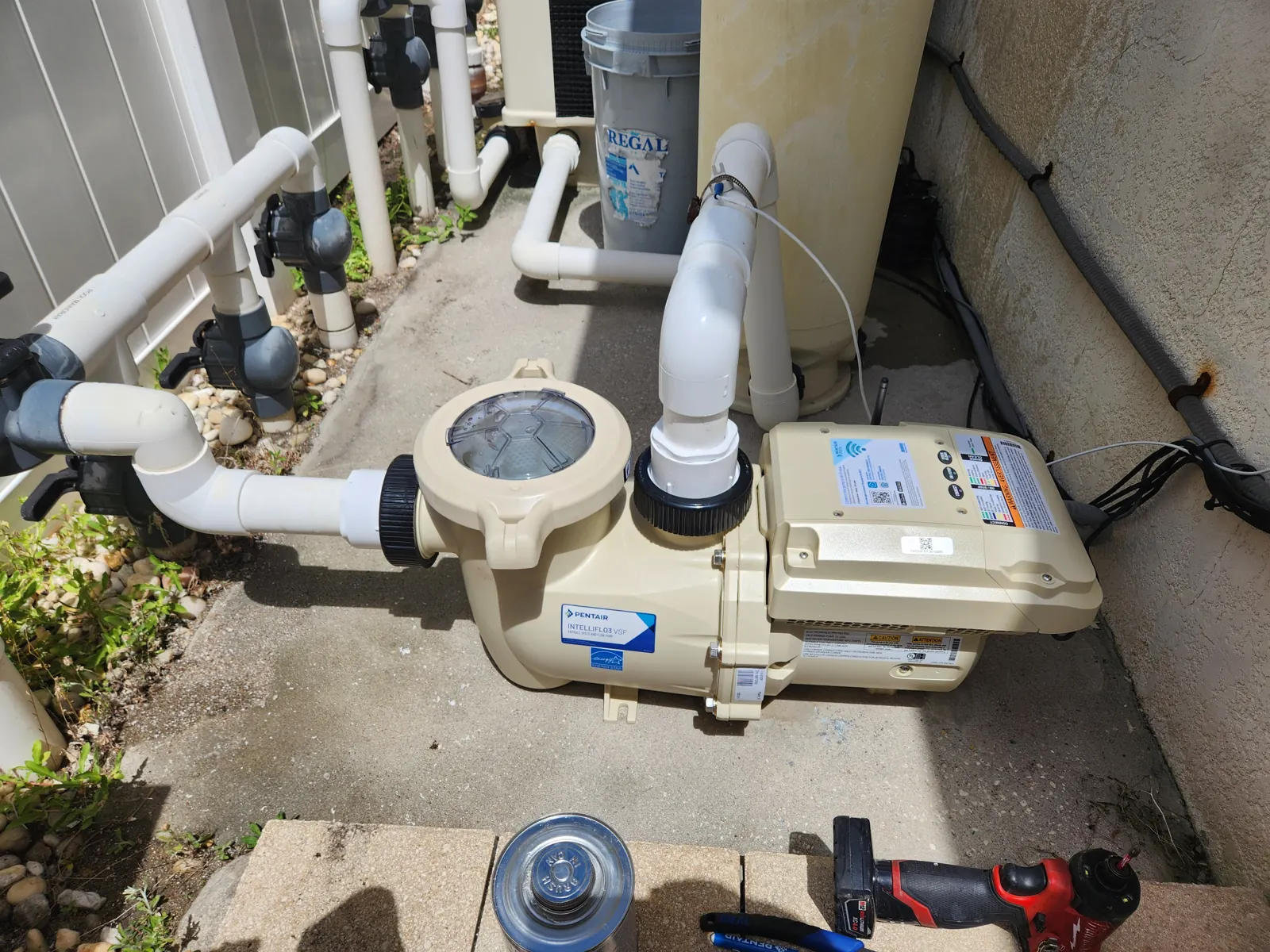
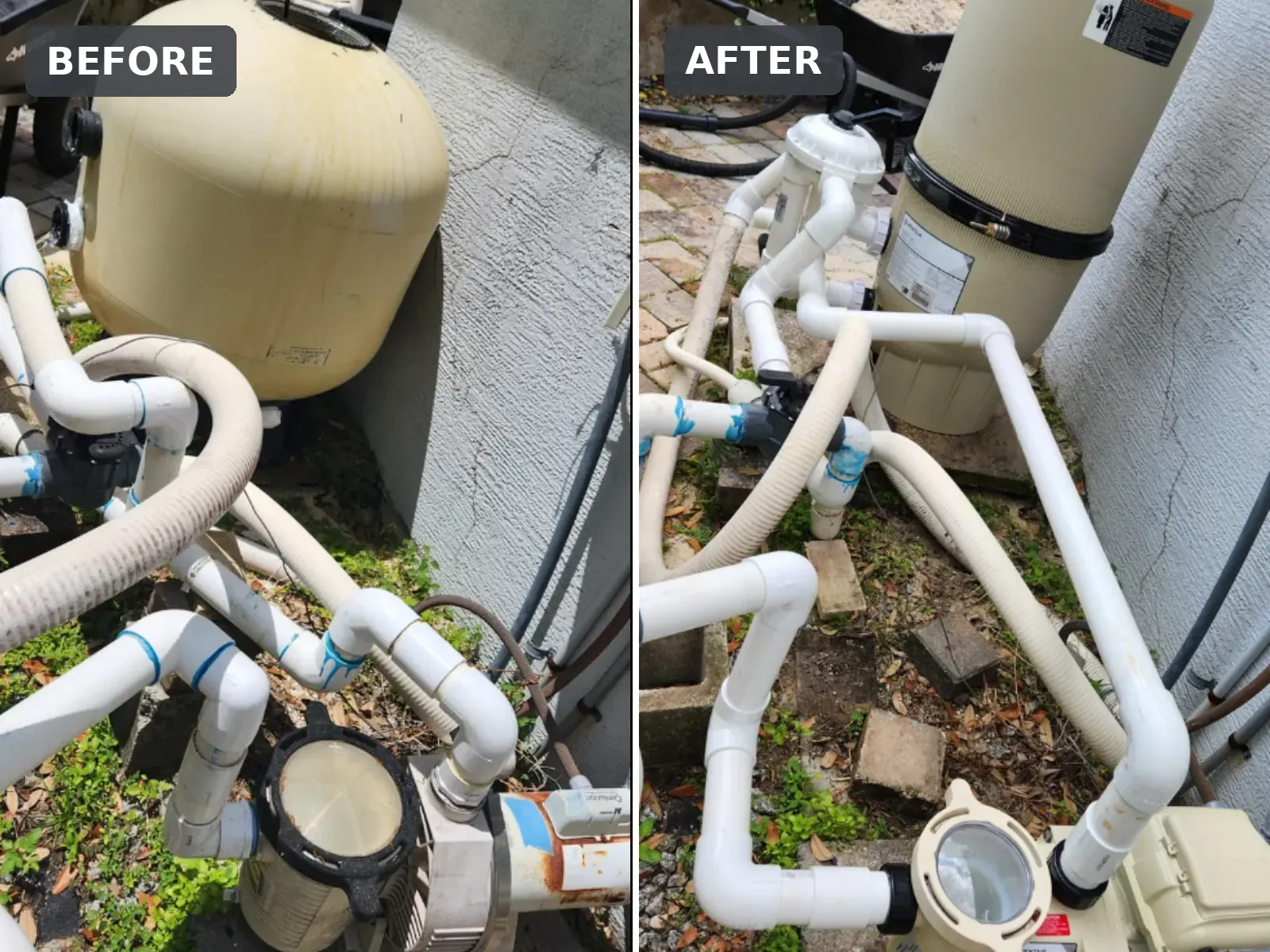
On a pool in Brooksville, I replaced an old sand filter with a new DE filter, installed a new Pentair variable-speed pump and re-plumbed the equipment. You can see the before and after on the projects page.
Every pool and equipment pad is different, so I quote filter swaps after a look at your setup. Call (352) 773-0088 or request a free quote.
Signs your filter needs attention
- The pressure gauge reads 8–10 psi above its normal "clean" reading
- The water stays cloudy even though the chemistry is balanced
- Sand or DE powder shows up on the pool floor (often a broken lateral, a torn grid or a cracked manifold)
- The cartridges are torn, flattened or falling apart
Thinking about a filter upgrade? Call (352) 773-0088 or request a free quote. I install and repair pool filters throughout Spring Hill, Brooksville, Weeki Wachee and Hernando County.